
Azoospermia Treatment in Homeopathy: Restoring Fertility Naturally in Jaipur
Azoospermia, the complete lack of sperm in the semen, can be an emotionally difficult diagnosis to cope with for couples. Here at Gupta Homoeo Clinic, we provide one of the very best forms of azoospermia treatment in homeopathy which takes a fully individualized and holistic approach to treat the underlying causes of the medical condition, stimulate the production of other male sex hormones, restore natural fertility and produce live sperm.
Azoospermia or infertility may feel like you have lost all hope of having a child, but it does not have to mean the in end of your family dream forever. For over 40 years, we at Gupta Homoeo Clinic have been a beacon of light for couples in Jaipur who are suffering and want the best fertility treatment available. Our practiced teams of experienced homeopathic physicians can offer you a compassionate and individualized form of azoospermia treatment in homeopathy, based on your health profile. We will gently treat and rebalance your system so you can encourage your own natural sperm to be produced. When you choose Gupta Homoeo Clinic, you will be choosing a non-invasive way of achieving fatherhood with over 40 years of know-how of providing azoospermia treatment in Jaipur.

What is Azoospermia?
Azoospermia is a medical description for the absence of sperm in a man’s ejaculate. In other words, a patient with azoospermia will have no sperm in their semen when examined microscopically, even if they have ejaculated. Azoospermia occurs in about 1% of all men and 10-15% of infertile men. Learning about the causes of azoospermia and the treatment options available is essential for diagnosis and management. Azoospermia can occur for multiple reasons both affecting sperm production as well as the transport of sperm.
Types of Azoospermia:
- Obstructive Azoospermia: Sperm are produced in the testicles but are blocked from being ejaculated. It can occur from infections, prior surgeries (for example, vasectomy), or congenital deformities of the reproductive tract.
- Non-Obstructive Azoospermia: This type of azoospermia is due to the incomplete or absent production of sperm in the testicles. This is often due to hormone issues that could result from genetic conditions (i.e. Klinefelter syndrome), undescended testicles, or prior damage to the testicles from infection, radiation, or medications. Maturation arrest azoospermia treatment is a condition that falls under this category of azoospermia, meaning there has been a complete halt in the development of sperm.

Symptoms
Azoospermia generally has no direct, obvious symptoms other than the inability to conceive a child aka infertility. Most men find out that they have azoospermia only when they go through the medical evaluation after they are not able to achieve pregnancy with their partner. However, some of the underlying causes of azoospermia may have associated symptoms.
Common Associated Symptoms (of the underlying actual causes):
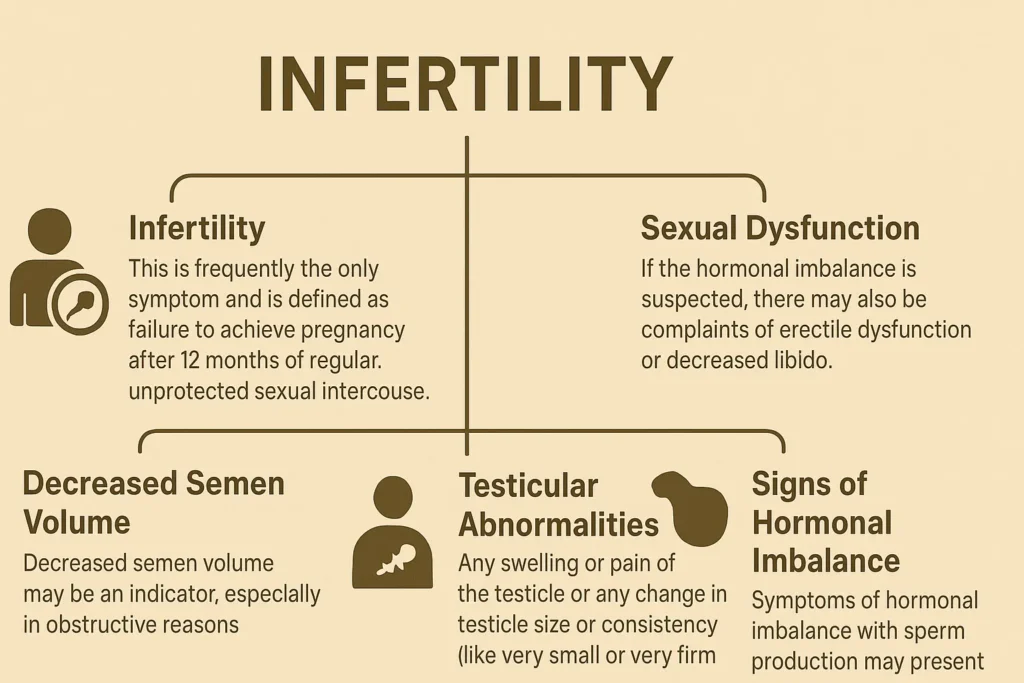
- Infertility: This is frequently the only symptom and is defined as failure to achieve pregnancy after 12 months of regular, unprotected sexual intercourse. Medical evaluation can clarify causes and treatment options.
- Decreased Semen Volume: Decreased semen volume may be an indicator, especially in obstructive reasons.
- Sexual Dysfunction: If the hormonal imbalance is suspected, there may also be complaints of erectile dysfunction or decreased libido.
- Testicular Abnormalities: Any swelling or pain of the testicle or any change in testicle size or consistency (like very small or very firm testicles) may suggest a production problem.
- Signs of Hormonal Imbalance: Symptoms of hormonal imbalance with sperm production may present as reduced body hair, body mass, and signs of gynecomastia (enlarged breast tissue).
- History of Infection: Old history of reproductive tract infections or sexually transmitted infections (STIs) can also occasionally lead to obstructions.
Do’s & Don’ts (Precaution & Care)
Although azoospermia usually occurs due to complex medical conditions, there are a number of lifestyle modifications and precautions that may help with overall reproductive health, and may be of some value when working with a treatment plan to address azoospermia.
Dos:
Don’ts:
- Remain Active: Participate in moderate activity on a regular basis and maintain an appropriate body weight. Obesity is associated with hormonal levels necessary for the production of sperm.
- Follow a Healthy Diet: A healthy diet contains many vitamins and nutrients. Focus on eating fresh fruits and vegetables, lean protein, and whole grains. Certain antioxidants might be an important factor in supporting your sperm health.
- Manage Stress: Chronic stress can play a big role in decreasing or preventing hormonal balance. Utilize and practice different stress reduction techniques, such as yoga or meditation.
- Protect Your Testicular Health: Avoid prolonged exposure to high temperatures (such as hot tubs and saunas) that can inhibit sperm production. Wear additional protective equipment during activities, such as sports, you may have the possibility to be injured.
- Limit Harmful Substance Intake: Limit or eliminate alcohol, avoid smoking, and limit recreational drugs. All of these can affect your fertility.
- Seek Help, Early Intervention Matters: If you and your partner are trying to conceive and are not having success, please seek medical attention. Early intervention will help prevent further issues.
- Do not Self-Diagnose: Do not attempt self-diagnosis or initiate treatment without medical consultation. Professional evaluation ensures the correct diagnosis and appropriate, evidence-based care.
- Do not ignore health issues: Health issues such as diabetes or hormonal problems should be appropriately treated, as they may affect fertility status.
- Do not expose yourself to toxins: Reduce exposure to toxin-related surfaces, i.e., environmental toxins, pesticides, heavy metals or certain industrial chemicals, etc., that may impact sperm production.
- Do not over-exercise: Exercise on a regular basis is important, but sometimes doing an excessive or stressed amount of exercise may negatively impact hormone levels.
- Do not take medications without checking: There are many medications that may impact sperm production, and make sure you check with your doctor if you have any fertility issues before taking any new drugs.
How Homeopathy Treats Azoospermia
Azoospermia treatment in homeopathy is a holistic, individualized solution to the complex issues that lead to the absence of sperm. While conventional or “allopathic” treatment often depends on hormones or surgical corrections, homeopathy aims to stimulate a patient’s healing ability to gently rectify the underlying reasons for the lack of sperm – which might be due to an inability to produce sperm, or an impediment due to obstruction in the delivery of sperm. The homeopathic treatment plan takes the patient’s entire physical and emotional state into account, resulting in a personalized treatment plan. Homeopathy for azoospermia aims to restore the natural physiological response of the body, and therefore, is an option for azoospermia natural treatment. It is important to note that homeopathy can provide immense support for non obstructive azoospermia treatment, where there is a treatment challenge to produce sperm, and also provide a treatment option for cases of non obstructive azoospermia treatment India where local factors exist. While stem cell treatment for azoospermia is a new frontier, homeopathy has been around for over two hundred years; it is established, non-invasive option.
Ready to Find a Permanent, Non-Surgical Cure?
Schedule a consultation with our experienced homeopathic doctors to get a personalized treatment plan for your kidney stones.

Dr. Sachin Gupta
Homoeopathic Physician MD(Hom.)
Renowned homeopathic physician and skin specialist in Jaipur, dedicated to providing personalized, effective treatments.

Dr. Saveena Gupta
Homoeopathic Physician BHMS, DNHE
Highly regarded homeopathic doctor in Jaipur, specializing in women’s health and gynecological disorders.
Our Online Booking & Doctors: Consult our experienced homeopathic doctors online for natural treatments. We are the best choice for those seeking homoeopathic doctors in Jaipur for kidney stone treatment.
Homeopathy Medicines for Treating Azoospermia:
- Agnus Castus: Generally suggested for low sexual vitality, loss of libido and hormonal imbalances that are affecting sperm development. It helps to stimulate the reproductive organs to engage the reproductive system.
- Conium Maculatum: Useful for azoospermia that is due to blockages in the reproductive tract or blockages due to testicular atrophy. It aims to manage inflammation and work on clearing blockages.
- Selenium: For low sperm count, poor sperm motility, and as an aid for general weakness, especially when correlated to oxidatively stressed states, or nutritional deficits.
- X-Ray: May be taken for azoospermia with testicular dysfunction, especially if subjected to prior radiation, to work towards achieving normal sperm production.
- Lycopodium Clavatum: Commonly prescribed with azoospermia caused by stress, gut issues or liver dysfunction, it works by improving general systemic functioning.
- Damiana: A natural aphrodisiac, improving blood flow and increasing circulating properties for balancing hormonal issues whilst enhancing energy and mental well-being, all related to stress and infertility.
Note : Please do consult first with your doctor, before taking any medicine. The remedies detailed within are for information purposes only. We do not endorse taking any medicine prior to consulting with your Doctor. Homeopathy medicines for any disease and management thereof are different from individual to individual depending upon body symptoms and body structure.
Disclaimer
The information provided is for educational purposes only and is not a substitute for professional medical advice or treatment. Always consult a qualified homeopathic doctor before starting any treatment. Results may vary based on individual health conditions. Avoid self-medication.
Q2: Can Azoospermia be treated with homeopathy?
Answer: Yes, homeopathy offers a holistic approach to azoospermia treatment in homeopathy, aiming to address the underlying causes and stimulate natural sperm production.
Q3: What are the main types of Azoospermia?
Answer: The main types are Obstructive Azoospermia (due to blockages) and Non-Obstructive Azoospermia (due to impaired sperm production).
Q4: How long does it take to see results with homeopathic treatment for Azoospermia?
Answer: The duration of treatment varies greatly depending on the individual’s condition, the underlying cause, and their response to remedies. It often requires consistent treatment over several months.
Q5: Is Azoospermia always permanent?
Answer: No, azoospermia is not always permanent. While some causes are irreversible, many forms, especially obstructive types or those due to hormonal imbalances, can be treatable.
Q6: Are there any side effects of homeopathic medicines for Azoospermia?
Answer: Homeopathic medicines are generally highly diluted and considered safe, with minimal to no side effects when prescribed by a qualified practitioner.